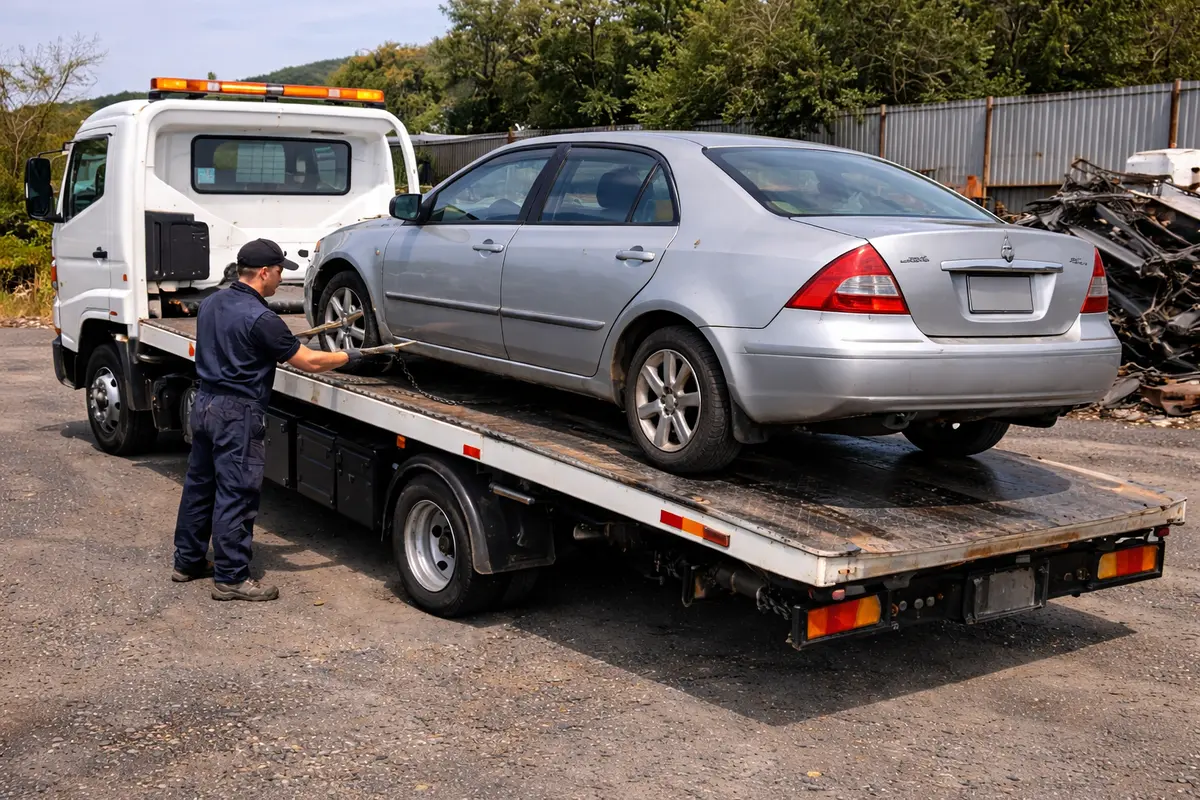
The short answer: Scrap or sell your car as-is if any one of these is true — the repair costs more than 50% of what the car will be worth once fixed, you've had 3 or more major faults in 12 months, or there's 1 structural or safety-critical problem (like rust in the chassis or a bent frame). That's the 50/3/1 Rule. If none apply, repairing is usually the better deal. Jump to the calculator ↓
Every week we talk to North Shore drivers standing in the same spot: a mechanic's quote in one hand, a car they've owned for years in the other, and no clear idea whether to pay up or walk away. The garage wants to fix it. Your gut says it's money down the drain. Your mate says "just one more WoF."
The problem is that most people make this call emotionally — or based only on the repair price. But the repair quote is just one number. To make the right call you need four: what the car is worth fixed, what it's worth as-is, what the repair costs, and what else is coming down the pipeline. This guide gives you a simple framework, real-world repair ranges for New Zealand, and a calculator that does the maths for you.
The 50/3/1 Rule: a simple way to decide
We've seen thousands of end-of-life cars come through the North Shore, and the ones that turn into money pits almost always fail one of three tests. We call it the 50/3/1 Rule:
| Test | The question | If yes… |
|---|---|---|
| 50 | Will the repair cost more than 50% of the car's value once fixed? | Lean strongly toward selling or scrapping. |
| 3 | Have you had 3 or more major repairs (roughly $500+ each) in the last 12 months? | The car is likely in a failure cycle — more is coming. |
| 1 | Is there 1 structural or safety-critical issue — chassis rust, frame damage, airbag deployment, flood damage? | Usually uneconomic to fix properly. Scrap it. |
Pass all three and repairing is generally the smart move — a well-maintained car you know is often better value than a stranger's used car with hidden problems. Fail any one and the numbers usually tip the other way.
Why 50%?
Insurers already use a version of this logic: when repair costs approach a car's market value, they declare it an economic write-off rather than fix it. As a private owner you should be more cautious than an insurer, because you also carry the risk of the next fault. Once you're spending half the car's value on one fix, you've effectively bought the car again — without getting a newer one.
Free Repair-or-Scrap Calculator
Pop in your numbers below. Everything runs in your browser — nothing is sent anywhere. Not sure what your car is worth as-is? Call us on 0800 705 243 for a free quote and use that figure.
Should I repair or scrap my car?
Your result appears here instantly.
What common repairs cost in New Zealand (2026)
Here's how the big-ticket repairs we see most often stack up against typical values of the cars they happen to. Prices are ballpark Auckland workshop ranges including parts and labour — they vary a lot by make, model and garage, so always get a written quote.
| Repair | Typical cost (NZD) | Often worth fixing when… |
|---|---|---|
| Cambelt / timing belt + water pump | $700 – $1,600 | Car is worth $4,000+ and otherwise healthy |
| Clutch replacement | $1,000 – $2,200 | Car is worth $4,500+ |
| CVT / automatic transmission (rebuild or replace) | $2,500 – $6,500+ | Car is worth $10,000+ — rarely on older Japanese imports |
| Head gasket | $1,800 – $4,000 | Car is worth $8,000+ and the engine hasn't overheated badly |
| Hybrid battery (reconditioned → new) | $1,800 – $5,000 | Car is worth $7,000+ (e.g. later Prius / Aqua) |
| Catalytic converter | $900 – $3,000 | Car is worth $5,000+ |
| Rust repair for a WoF (structural) | $800 – $5,000+ | Rarely — rust usually spreads beyond the first quote |
| Front-end accident damage | $2,500 – $10,000+ | Car is late-model and insured |
Notice the pattern: the most expensive repairs — transmissions, head gaskets, structural rust and crash damage — tend to hit cars aged 12–20 years, exactly the cars whose market value has already dropped to a few thousand dollars. That collision of high cost and low value is why so many North Shore cars end up failing the 50% test.
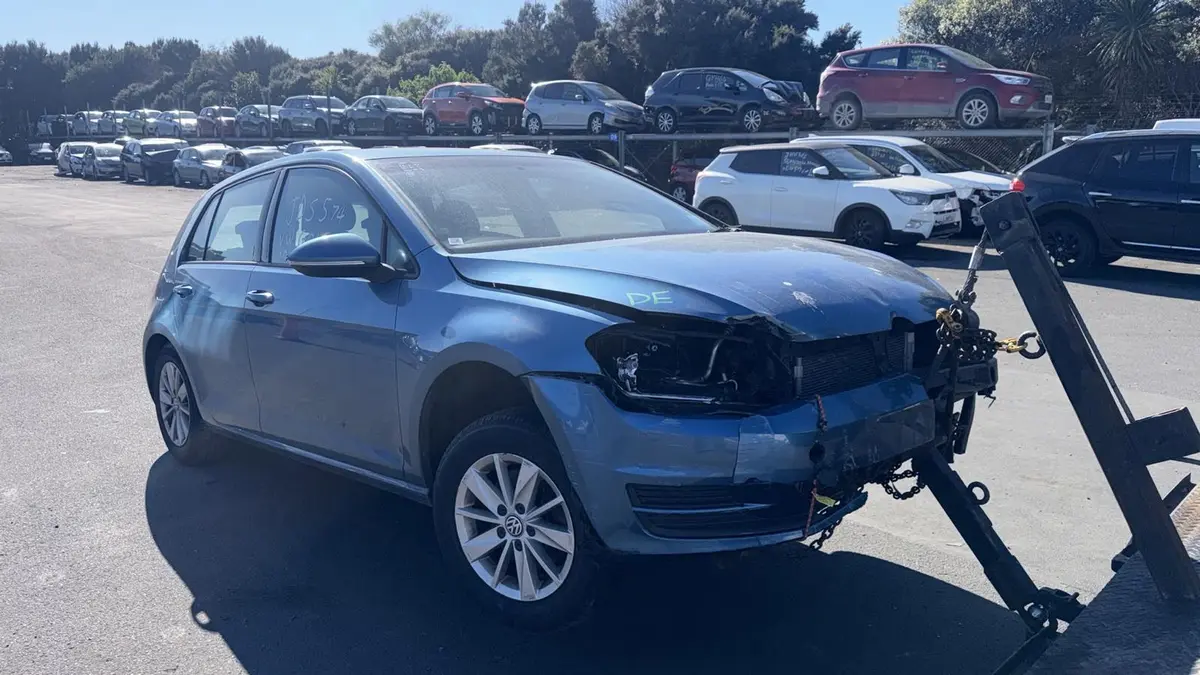
The hidden costs people forget to count
The repair quote is never the full story. Before you say yes, add these to the "keep it" side of the ledger:
- The next WoF. Cars first registered on or after 1 January 2000 need a WoF every year once they're over three years old; older cars need one every six months. Each inspection is another chance for a fail list. (NZTA: Warrant of Fitness)
- Registration (licensing). Keeping a car on the road means paying vehicle licensing fees, and diesel vehicles also pay road user charges. (NZTA: Licensing)
- Tyres, brakes and suspension. Wear items that tend to all come due around the same time on older cars.
- Insurance. You're still paying premiums on a car whose value keeps falling.
- Your time. Days without a car, rides to the garage, lost work hours — real costs that never appear on an invoice.
- Depreciation after repair. A $3,000 repair doesn't add $3,000 to your car's value. In the resale market, a new gearbox mostly just stops the price from being zero.
Our calculator includes a field for 12-month upcoming costs for exactly this reason. If you're unsure, ask your mechanic: "What else is this car going to need in the next year?" A good mechanic will tell you straight.
7 signs it's time to let your car go
- The repair quote is more than half the car's value. The 50 in the 50/3/1 Rule.
- You're on first-name terms with your mechanic. Three or more major repairs in a year means the car is wearing out as a system, not just one part.
- Rust is showing on sills, floor pans or strut towers. Structural rust is a common WoF fail on older cars and rarely stops where the first quote says it will.
- It's been in a flood. Water damage to wiring and electronics can surface for months. Our flooded and written-off cars guide explains why.
- Warning lights have become décor. Persistent check-engine, ABS or airbag lights often mean expensive diagnostics before the repair even starts.
- Parts are hard to get. Some older imports need parts sourced from overseas, adding weeks and cost.
- You no longer trust it. If you wouldn't let your family drive it to Whangārei, that's an answer in itself.
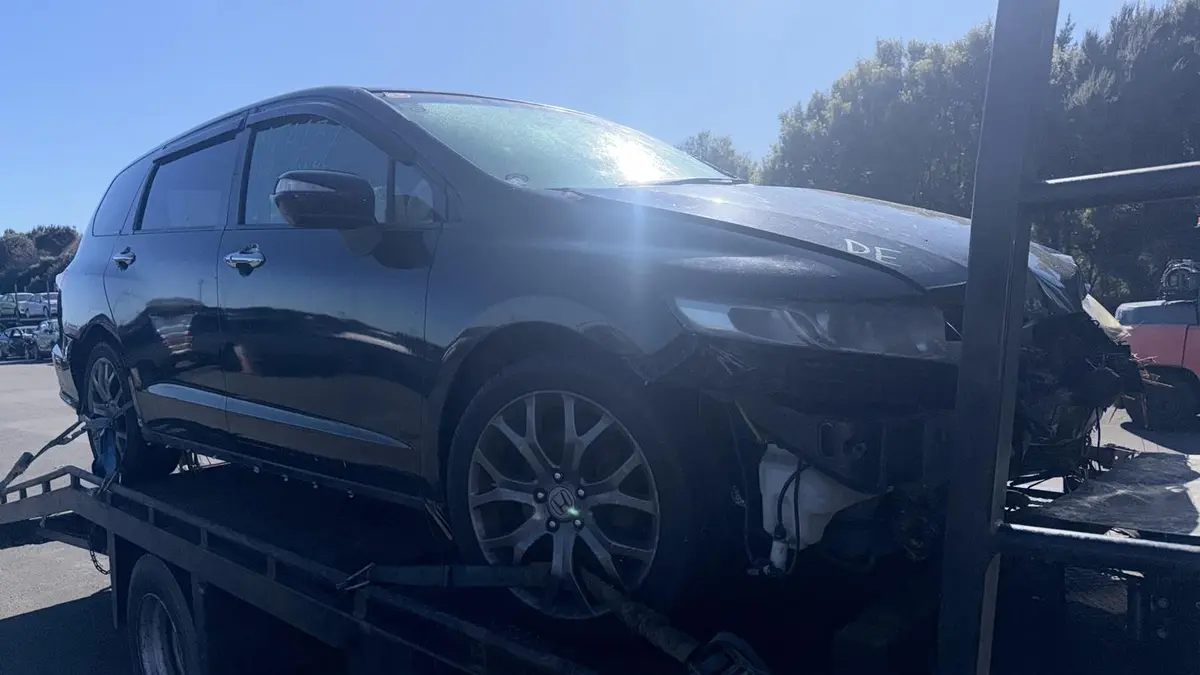
When repairing is the right call
We buy cars for a living, so you might expect us to tell you to scrap everything. We won't. Repairing is usually smarter when:
- The car is under about 10 years old and has a good service history.
- The fault is a one-off wear item (a cambelt, a clutch, brakes) rather than a sign of wider decline.
- The repair is well under 50% of the car's repaired value and nothing else major is due.
- Replacing the car would mean taking on finance at a high interest rate.
- It's a model that holds its value well in NZ — think Toyota Hilux, Land Cruiser Prado or a late-model Corolla.
In those cases, fixing a car you know is often the cheapest way to stay on the road. Get two quotes, ask for parts and labour itemised, and check the workshop is MTA-assured or similarly accredited.
Your three options if you don't repair
| Option | Best for | Watch out for |
|---|---|---|
| Private sale as-is | Cars that still run and look tidy | Time-wasters, scams, and disclosure obligations. See our NZ car scams guide. |
| Trade-in at a dealer | Convenience when buying another car | Low trade-in values on faulty cars, often baked into the new car's price. |
| Cash for cars / wrecker | Non-runners, failed WoFs, damaged or high-km cars | Make sure the buyer handles NZTA paperwork and pays on pickup — we do both. |
For a deeper side-by-side, read cash for cars vs private sale. If you want to know what your car is worth as scrap, our scrap car value guide breaks down how weight, parts demand and metal prices shape the offer.
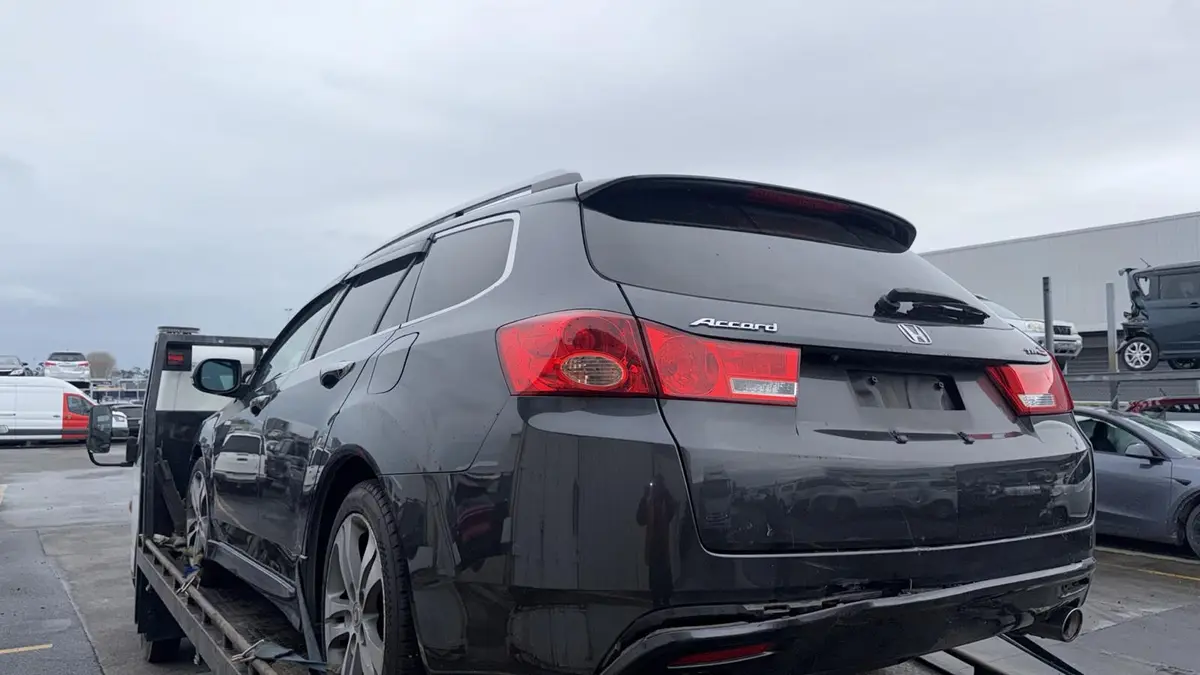
Worked example: a 2010 Nissan with a failing CVT
Here's a typical scenario we see, run through the 50/3/1 Rule:
- Value once repaired: $5,500
- CVT replacement quote: $3,800
- Also due: tyres and a WoF brake job, $900
- Cash offer as-is: $900
The maths: $3,800 + $900 = $4,700 in costs, which is 85% of the repaired value — a clear fail on the 50 test. Repairing leaves the owner with a $5,500 car for $4,700 out of pocket (net position $800). Selling as-is puts $900 in their pocket today, with no risk of the next fault. Selling wins — and that's before counting the $4,700 they don't have to find.
Now flip it: same car, but the problem is a $1,100 cambelt and nothing else is due. That's 20% of the repaired value. Net position after repair: $4,400 — far better than $900. Repair it.
If you decide to scrap: how it works on the North Shore
- Get a quote. Call 0800 705 243 or use our online form with the make, model, year and condition.
- Book a pickup time. Often same day, anywhere from Devonport to Long Bay and Albany.
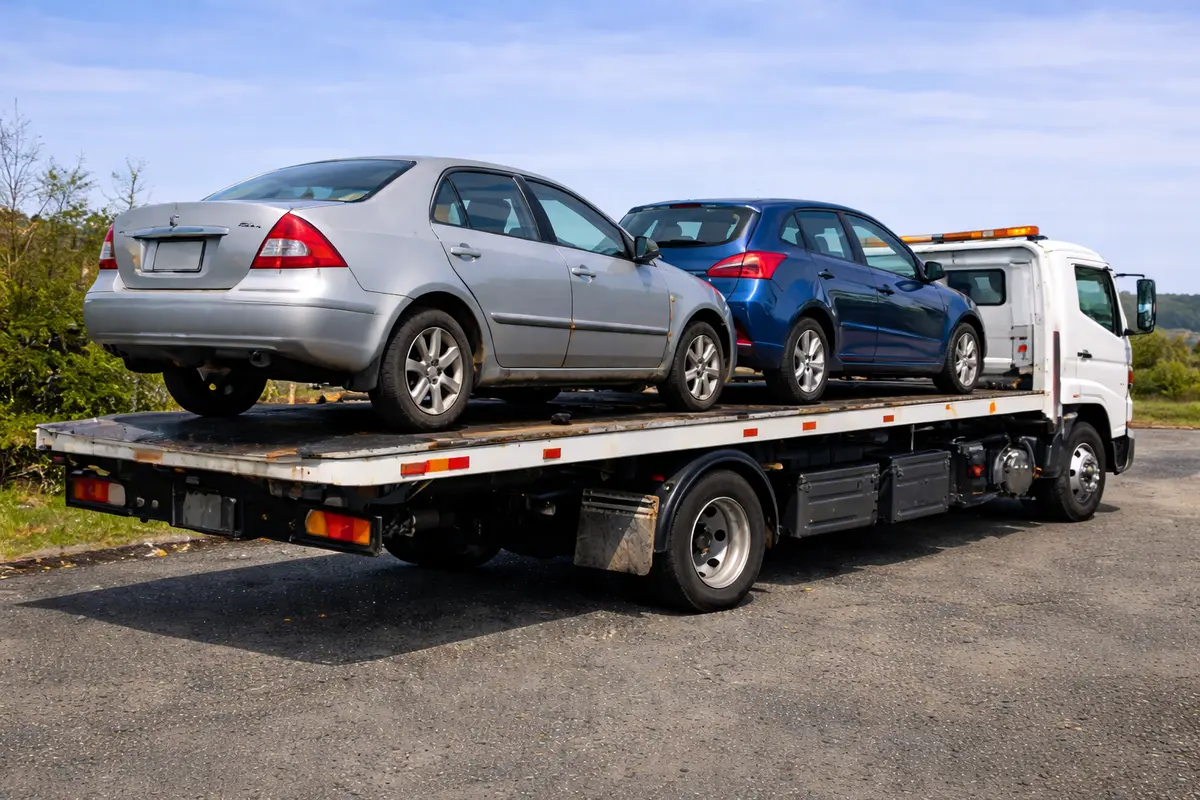
- We tow it for free. Running or not, WoF or not, rego or not. (See selling without a WoF or rego.)
- Paperwork done on the spot. We handle the NZTA change of ownership, so it's off your name.
- Get paid. Cash or bank transfer at pickup. Still owe money on it? Read selling a car with finance owing.
Curious what happens next? Fluids are drained and disposed of responsibly, reusable parts are tested and resold, and the remaining shell is recycled as scrap metal. Our behind-the-scenes guide and North Shore Car Recycling Report 2026 go deeper. The Ministry for the Environment has more on New Zealand's product stewardship approach to tyres and other end-of-life products.
Share or cite this guide
Journalists, bloggers, mechanics and community groups are welcome to reference the 50/3/1 Rule and link to this calculator. Copy the snippet below:
<a href="https://cashforcarsnorthshore.nz/blog/repair-or-scrap-car-nz-calculator/">Repair or Scrap? The 50/3/1 Rule & Free NZ Calculator — Cash For Cars North Shore</a>
A note on this guide. Repair prices are indicative ranges to help you sense-check a quote, not a substitute for one. Every car is different — always get a written quote from a qualified mechanic, and check current fees and WoF rules with NZTA Waka Kotahi. Consumer advice on buying and repairing cars is available from Consumer NZ.
Frequently asked questions
How do I know if my car is worth repairing in NZ?
Use the 50/3/1 Rule: if the repair costs more than 50% of what the car will be worth once fixed, if you've had 3 or more major repairs in the last 12 months, or if there's 1 structural or safety-critical issue such as chassis rust or flood damage, selling or scrapping is usually the better financial choice. If none of those apply, repairing is generally worthwhile.
What is the 50% rule for car repairs?
The 50% rule says that if a repair (plus any other costs due in the next year) is more than half of the car's value once repaired, you should seriously consider selling or scrapping it instead. At that point you've effectively paid for the car again without getting a newer one, and you still carry the risk of the next fault.
Is it worth fixing a car that failed its WoF?
It depends on what failed. Minor items like bulbs, wipers or a tyre are cheap and almost always worth fixing. Structural rust, major suspension work or brake system repairs on an older, low-value car often aren't. Compare the repair quote with the car's value once warranted — and remember that you can sell a car without a current WoF.
Can I sell my car without fixing it?
Yes. You can sell a car as-is in New Zealand — privately, as a trade-in, or to a cash for cars buyer. Cash for cars buyers like us collect non-running, damaged and unwarranted cars for free, handle the NZTA change of ownership and pay on the spot.
Should I replace the transmission or scrap the car?
For most cars over about 12 years old, a transmission or CVT replacement (often $2,500–$6,500+) is more than half the car's value, so scrapping or selling as-is usually makes more sense. On newer, higher-value cars and in-demand utes or 4WDs, replacing the transmission can still be worthwhile.
How much will I get for my car if I don't repair it?
It depends on the make, model, weight, condition and demand for its parts. Scrap and non-running cars on the North Shore typically fetch from a few hundred dollars upward, while damaged late-model cars, utes and 4WDs can be worth considerably more. Call 0800 705 243 for a free, no-obligation as-is quote.
Get a scrap value to compare — free
The single most useful number in this whole decision is what your car is worth today, as-is. Call 0800 705 243 or fill in our quote form and we'll give you a no-obligation figure. Then plug it into the calculator — and make the call with confidence.